

Range covers professionally installed flooring, materials and labor included. LVP and carpet trend lower; tile and solid hardwood trend higher.
Local flooring considerations in Capitol Hill, CO
The bones of the room, the subfloor material, its level, whether there's a moisture issue, matter more than the finish once it comes to scope and price. Homes in Capitol Hill span a range of ages, and it's usually the specific home's era that decides whether a flooring project is a straightforward install or needs subfloor work first, and it lines up with the broader Colorado housing profile (U.S. Census AHS, 2023).
Mineral-heavy municipal water is a routine reality here, so waterproof flooring in laundry rooms and entryways pays off when a supply line or appliance eventually drips. Colorado licenses at the city or county level, and Denver-area flooring replacement is typically exempt from permitting unless it involves subfloor changes. Among Capitol Hill homeowners, the projects that come up most often are pre-war floors with plaster and original plumbing and compact single-unit flooring replacements in fourplex and townhome units.
Nationally, installed flooring prices per square foot tend to land in a wide band that shifts with local labor and material choice (HomeGuide, 2024). Within Greater Denver specifically, a Capitol Hill project's price usually falls closer to the metro's local construction-cost index than to any national headline (RSMeans CCI, 2024).
For homeowners weighing tile vs. LVP in a Capitol Hill kitchen or laundry room, our tile vs. LVP moisture-prone room guide breaks down what holds up locally and what doesn't. If you're weighing plank options for a Capitol Hill home, our LVP vs. hardwood comparison covers what actually changes in durability, cost, and resale. Like-for-like flooring rarely needs a permit in Capitol Hill, but the CO flooring permit and licensing rules explain when one is required and what a legitimate contractor should handle for you.
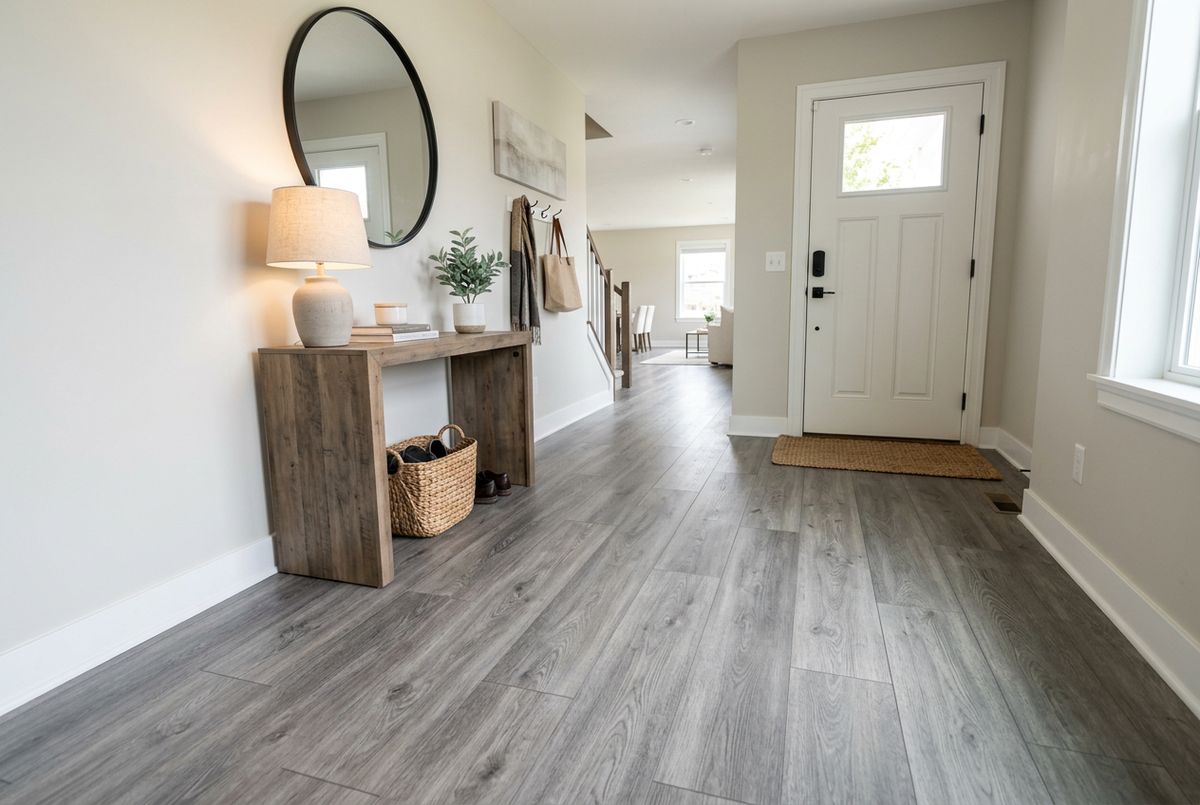
Common reasons homeowners in Capitol Hill replace flooring
Across Capitol Hill and the surrounding Denver County, most flooring projects fall into a handful of patterns. The right choice depends on the existing subfloor, the room's moisture exposure, and how long you plan to stay in the home.
- Pre-war floors with plaster and original plumbing
- Compact single-unit flooring replacements in fourplex and townhome units
- Tile primary-suite updates in converted mansion conversions
If you already have a direction in mind, jump to our Flooring for Seniors (Greater Denver) in Capitol Hill or Capitol Hill lvp vs. tile flooring (greater denver) guide.
LVP, engineered hardwood, tile, or carpet, which fits?
Most homeowners come into this thinking they need one specific material and end up reconsidering once they learn what holds up where. The right choice usually maps to the room's moisture exposure and how much daily wear it takes.
In kitchens, entries, and basements, waterproof LVP or tile is usually the safer call over solid hardwood. Bedrooms and living rooms can support engineered or solid hardwood, carpet, or LVP depending on budget and whether pets are in the house. If the existing hardwood is in good shape structurally, a refinish is often cheaper than replacement and keeps the resale appeal.
| LVP | Tile | |
|---|---|---|
| Install time | 1–3 days | 3–7 days |
| Typical cost | $$ | $$$ |
| Maintenance | Low - wipe clean | Higher - grout care |
| Moisture tolerance | Waterproof core | Fully waterproof |
What actually drives the cost of a flooring installation
Cost ranges in Capitol Hill track the broader Greater Denver market, but local housing stock and the specifics of your rooms matter more than ZIP.
Flooring pricing depends on a handful of choices, not a single line-item. The biggest swings come from material (LVP vs. engineered hardwood vs. tile vs. carpet), the condition of the existing subfloor, how much square footage you're covering, and whether old flooring needs to come out first.
A straight LVP or carpet swap over a sound subfloor is the most predictable, often $3–$8 per square foot installed. Solid hardwood refinishing, tile with a mud-set base, or a full subfloor replacement over a damaged slab or joist system is where prices start to spread, sometimes $10–$18+ per square foot installed.
- Material: sheet vinyl and carpet at the low end, LVP and laminate mid-range, solid hardwood and natural stone tile at the top
- Subfloor condition: sound plywood vs. squeaky, uneven, or moisture-damaged subfloor that needs repair first
- Removal: pulling up old carpet, tile, or multiple layers of flooring adds labor and disposal cost
- Square footage and room shape: open layouts install faster per square foot than choppy floor plans with lots of transitions
- Moisture: basements and slab-on-grade areas may need a vapor barrier or moisture-tolerant material
- Trim, transitions, and stair treads, often priced separately from the per-square-foot install rate
Source: Cost drivers reflect line-item data from full-service flooring installations in the Capitol Hill, Greater Denver market ((HomeGuide, 2024), (Angi, 2024)), with housing-age context from the U.S. Census American Housing Survey ((U.S. Census AHS, 2023)).
Flooring choices that hold up for kids, pets, and aging in place
The flooring upgrades that matter most day-to-day are usually about slip resistance, easy cleanup, and a flat, low-transition surface, not a specific brand or finish.
- Low-pile carpet or textured LVP for better traction than polished tile or glossy hardwood
- Minimal thresholds between rooms so wheelchairs, walkers, and stroller wheels roll through cleanly
- Waterproof cores in kitchens, entries, and laundry rooms so spills don't warp the subfloor
- Scratch-resistant finishes on hardwood or LVP in homes with dogs and cats
- Matte or low-sheen finishes that show fewer scuffs and are less slippery when wet
- Consistent flooring height between rooms to avoid trip hazards at transitions
Questions to ask before signing a flooring contract
The fastest way to compare bids is to make sure they're scoped the same way. Ask each installer the same questions, in writing, and pay attention to what's included vs. what shows up as a change order once the old flooring comes up.
- Is subfloor repair or leveling included, or billed separately if it's needed once demo starts?
- Who hauls away the old flooring, and is disposal included in the quote?
- What's the warranty on installation labor vs. the manufacturer's warranty on the material itself?
- Is furniture moving, door trimming, and transition-strip work included?
- What financing options are available, and what's the APR, not just the monthly payment?
- Will the same crew be on site every day, and how many days should the install actually take?

Before you spend an evening on estimates for your Capitol Hill flooring project, let me walk you through the guide. You'll leave with a clear scope, a realistic budget band, and a list of the right questions to ask. Talking to an installer is a decision for later, not the first step.
See your personalized remodel plan in 2 minutes
Tell me a bit about you and I'll tailor the plan to your home and budget. No pressure, no obligation.
See if FloorGuide matches a local provider in your area
Enter your first name and ZIP code. If we currently match homeowners there, we'll let you know , and you can still get your guide either way.
Planning guides & tools
More flooring guides near Capitol Hill
Frequently asked questions
How much does flooring installation cost in Capitol Hill, CO?+
Costs in Capitol Hill, CO track the broader Greater Denver market. A typical mid-range flooring project runs about $3–$12 per square foot installed, with LVP and carpet on the lower end and tile or solid hardwood on the higher end. Room size, subfloor condition, and material choice move the number more than ZIP code does.
How long does a flooring installation take in Capitol Hill, CO?+
Most straightforward LVP or carpet installs finish in 1–3 days once materials arrive. Whole-home projects usually run 3–7 days on-site. Lead time from signed contract to install day is commonly 2–6 weeks depending on the installer's schedule and any special-order materials.
Do I need a permit to replace flooring in Capitol Hill, CO?+
Straight material swaps over an existing subfloor usually don't require a permit. Subfloor structural repairs or work that touches plumbing (like relocating a floor drain) may. A reputable local installer will confirm what's needed as part of the quote.
Does FloorGuide serve Capitol Hill, CO?+
Yes - FloorGuide is available to Capitol Hill, CO homeowners. The 2-minute guided conversation produces a personalized flooring profile you can use on your own, and optionally match with a vetted local installer afterward.
- Planning a bathroom remodel?Waterproof floors are one piece — price the whole bathroom. — BathGuide
- Replacing windows in the same rooms?Per-opening pricing, glass packages, and energy rebates. — WindowGuide
- Doors and thresholds on the list too?Entry, patio, and interior doors with real install costs. — DoorGuide
Ready to see your remodel profile? FloorGuide is a 2-minute guided conversation, not a contractor form, you'll see your personalized plan before sharing anything. Matching with a local provider is optional.
See your personalized remodel plan in 2 minutes
Tell me a bit about you and I'll tailor the plan to your home and budget. No pressure, no obligation.